📚 Business Intelligence Solutions
A Business Intelligence (BI) solution converts raw transactional data into actionable information to drive effective business decisions. Rather than treating BI as an epic, monolithic corporate system, the text emphasizes a “Think Small, Win Big” philosophy utilizing Rapid Application Development (RAD) to deliver fast, iterative prototypes.
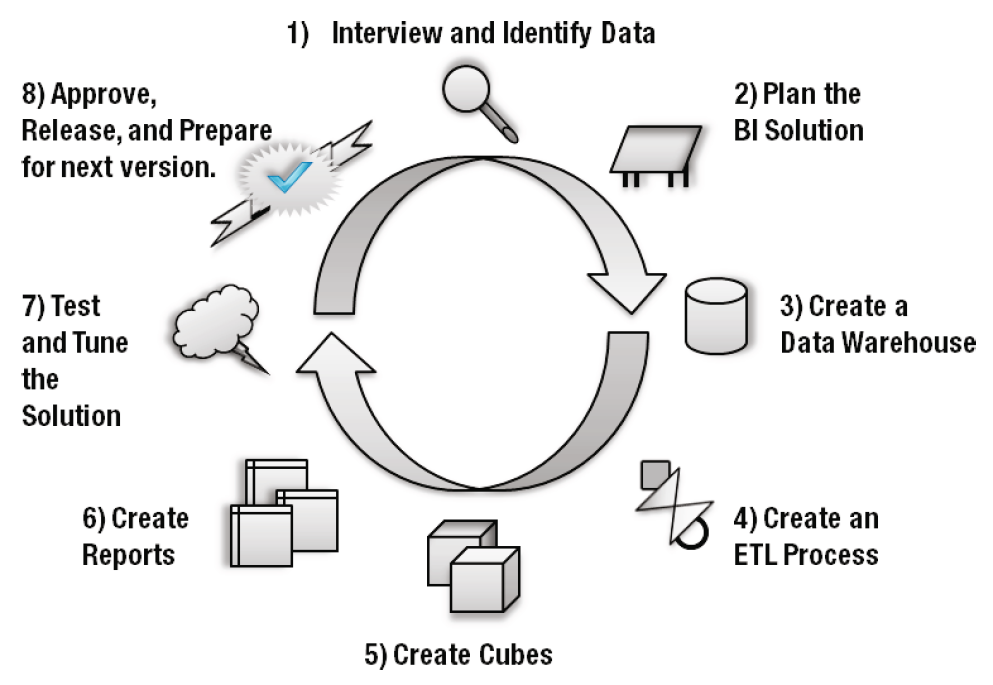
1️⃣ The 8-Step BI Solution Life Cycle
-
Interview and Identify Data: Gather business questions and locate data sources (spreadsheets, text files, OLTP databases).
-
Plan the BI Solution: Document source-to-destination mappings, data types, and transformation rules (commonly drafted in tools like Excel).
-
Create a Data Warehouse: Structure a dedicated reporting database using dimension and fact tables (star or snowflake schemas).
-
Create an ETL Process: Extract source data, transform it for analytical consistency, and load it into the warehouse using SQL Server Integration Services (SSIS).
-
Create Cubes: Pre-aggregate dimensional data into multidimensional OLAP cubes via SQL Server Analysis Services (SSAS) for high performance.
-
Create Reports: Expose warehouse and cube data to end users through tools like Microsoft Excel and SQL Server Reporting Services (SSRS).
-
Test and Tune: Validate data accuracy, verify report consistency, and tune execution performance.
-
Approve, Release, and Prepare: Package artifacts, train users, gather feedback, and define the scope for the next iteration.
2️⃣ BI Solution Life Cycle Diagram
3️⃣ Effective Decision Making
Business Intelligence (BI) is formally defined as the delivery of accurate, useful information to the appropriate decision makers within the necessary timeframe to support effective decision making. Decisions are effective when choices move an organization closer to an agreed-upon set of goals in a timely manner.
Key Ingredients of Effective Decisions
- Specific Goals: Clear organizational benchmarks to work towards.
- Concrete Measures: Verifiable metrics tracking whether actions move toward or away from goals.
- Timely Information Delivery: Divided into Foundation Information (the baseline data needed to make the decision) and Feedback Information (the post-decision telemetry used to evaluate its impact).
4️⃣ Decision Hierarchy & Information Latency
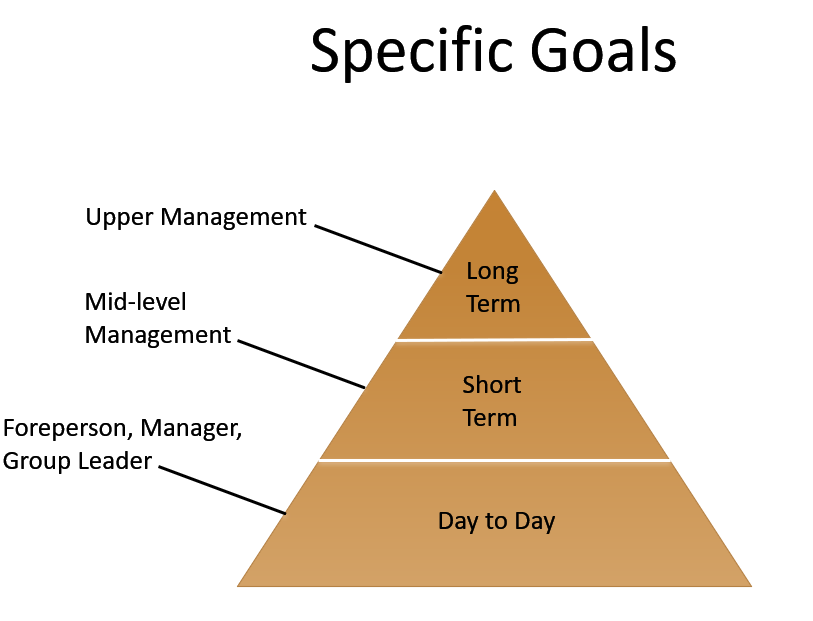
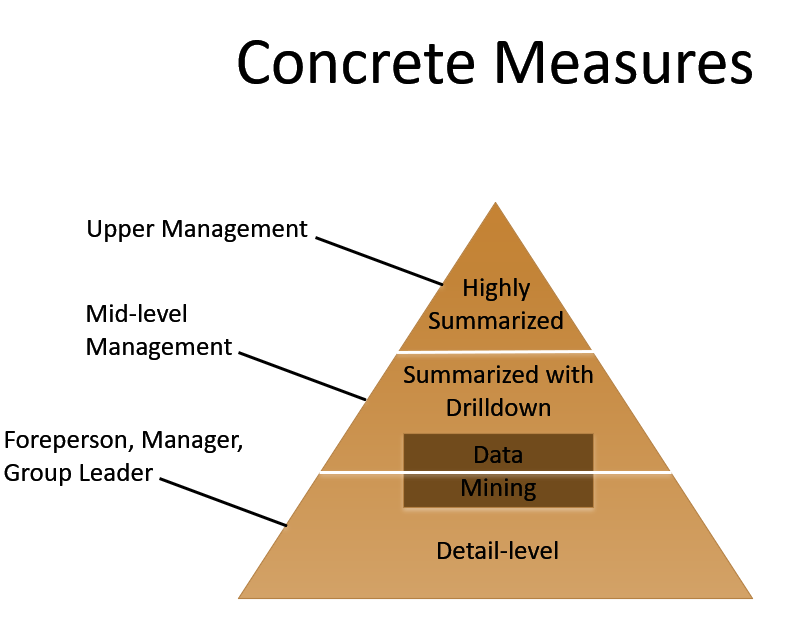
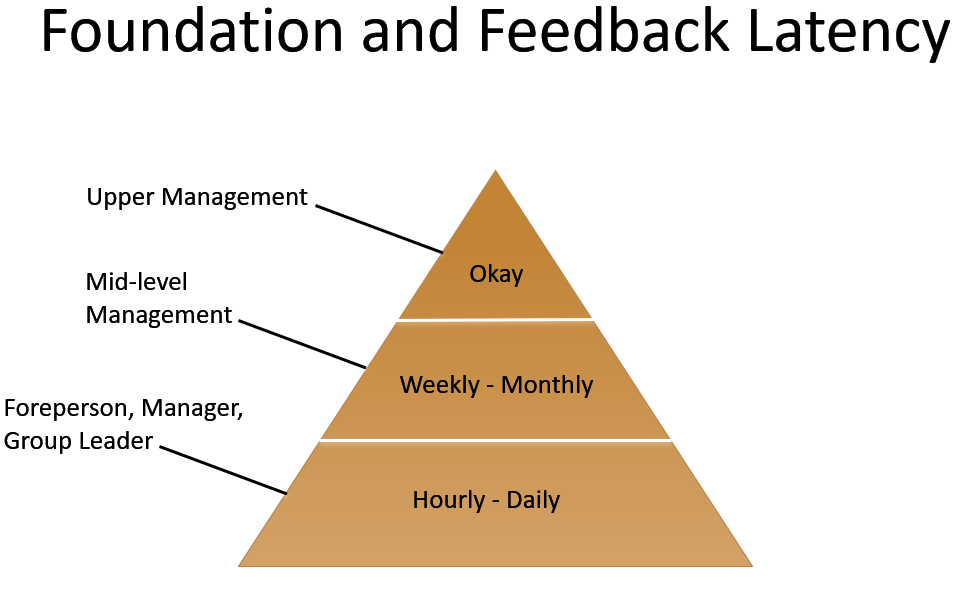
Information requirements vary significantly across organizational tiers:
| Organizational Level | Planning Scope | Information Format & Detail | Allowable Latency | Discovery Style |
|---|---|---|---|---|
| Upper Management | Long Term | Highly Summarized KPIs | Moderate (Weekly/Monthly) | Layout-led (known metrics) & Data Mining |
| Mid-level Management | Short Term | Summarized with Interactive Drilldown | Intermediate (Weekly) | Data-led (exploratory, iterative drilldown) |
| Operational Leaders | Day-to-Day | Granular / Detail-level Records | Low (Hourly/Daily) | Layout-led Discovery (operational monitoring) |
5️⃣ Data Discovery Modes
- Layout led Discovery: The user knows the question beforehand and exactly where to locate the result (standard dashboards, fixed tabular reports).
- Data-led Discovery: Viewing one data point informs the next analytical question; relies on drilldowns, OLAP cubes, and interactive slices.
- Data Mining: Algorithmic discovery uncovering patterns and answering questions stakeholders did not think to ask.
6️⃣ Seeking the Source: The OLTP vs. OLAP Conflict
The bulk of BI data originates in transactional systems (OLTP). While it is technically possible to point reports directly at an operational OLTP database, production architectures isolate reporting inside a Data Mart or Data Warehouse (OLAP)
- Design Purpose: OLTP systems optimize high-concurrency inserts, updates, and deletes. OLAP optimizes large-scale read aggregations across millions of records.
- Resource Contention: Heavy analytical queries lock operational tables, bogging down transactional processing.
- Historical Archiving: Transactional tables periodically prune or archive historical data to keep the database lean; BI requires deep historical trails.
- Divided Systems: Business domains are siloed across disconnected transactional databases (ERP, CRM, Billing); a warehouse consolidates these into a single conformed